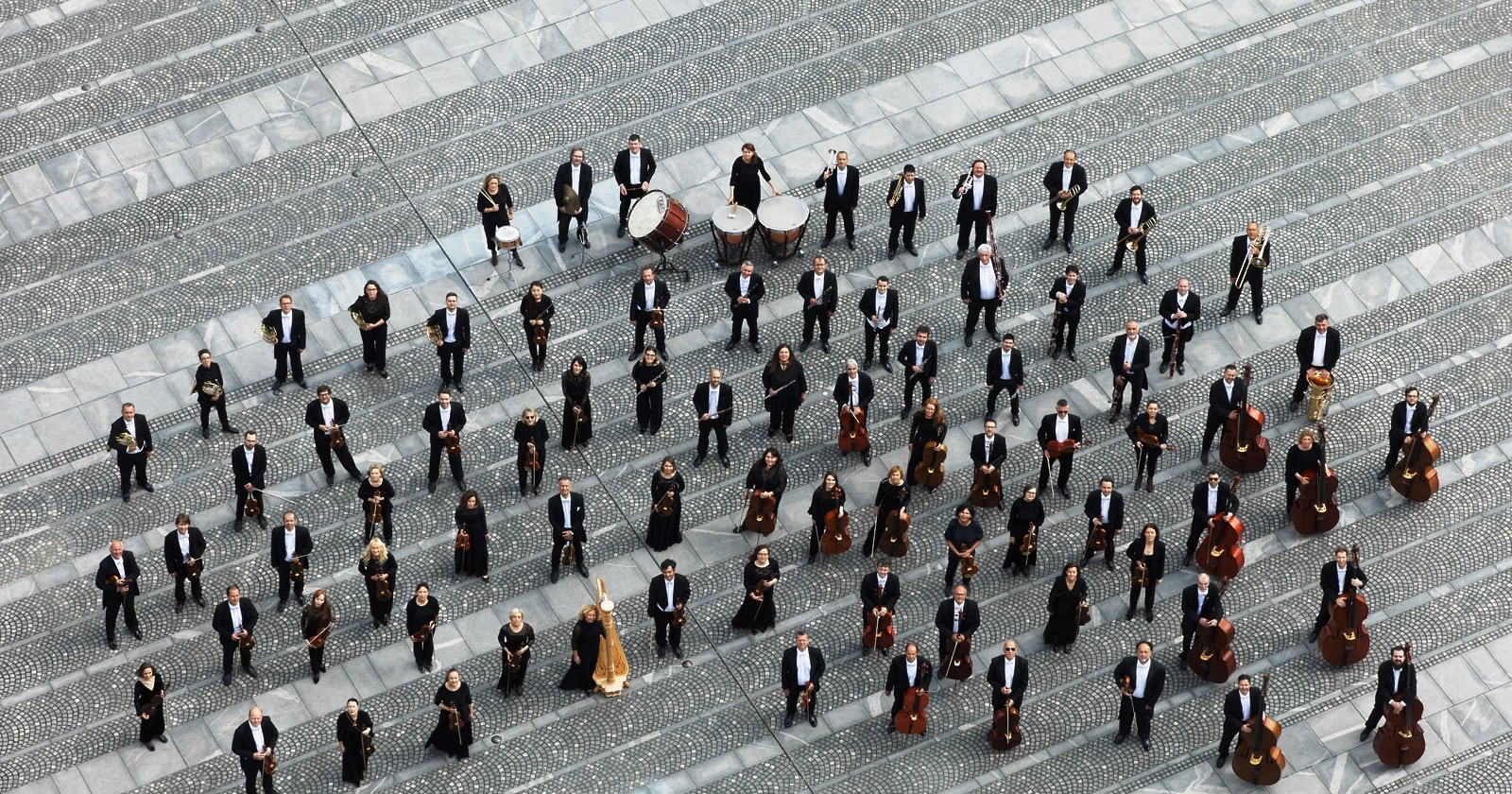
THE SLOVENIAN PHILHARMONIC ORCHESTRA
Conductor: Davorin Mori
Soloist: Nejc Kamplet, piano
Programme:
Danilo Švara (1902–1981), Valse interrompue
Sergej Rahmaninov (1873 – 1943), Piano Concerto No. 3 in D minor, Op. 30
Intermission
Antonín Dvořák (1841–1904), Simphony No. 9 in E minor, Op. 95, “From the New World”
The Slovenian Philharmonic Orchestra boasts a long and rich tradition dating back to 1701, while in its present form it has existed since 1947. Bringing together outstanding Slovenian and international musicians, the orchestra regularly performs at prestigious international festivals and presents both the classical repertoire of the 18th and 19th centuries as well as contemporary music. Over the decades, the orchestra has developed under the guidance of distinguished Slovenian and international conductors. For this concert, it will perform under the baton of Davorin Mori, one of the most promising Slovenian conductors of the younger generation.
Davorin Mori has held the position of Principal Guest Conductor of the RTV Slovenia Symphony Orchestra since 2024. He gained international recognition in 2016 at the opening concert of the Salzburg Festival with a performance of Karen Asatrian’s jazz mass Prayer Wheel together with the Vienna Philharmonic Choir. He has conducted the Slovenian Philharmonic Orchestra, the ORF Vienna Radio Symphony Orchestra, and numerous other international ensembles. Mori also served as assistant to chorus master Thomas Lang at the Vienna State Opera and currently appears as a guest chorus master at Malmö Opera, while also serving as founder and artistic director of the chamber orchestra Camerata Sinfonica Austria.
Nejc Kamplet has established himself on international stages as one of Slovenia’s most distinguished young pianists. He began his musical education at the Conservatory of Music and Ballet in Maribor, graduated with distinction in piano studies in Graz, and continued his studies in Hanover, while further refining his artistry through masterclasses across Europe and beyond. He has appeared as a soloist with renowned orchestras both in Slovenia and abroad, collaborated with numerous acclaimed international conductors, and received several prizes at international piano competitions.
Valse interrompue (“Interrupted Waltz”) is one of Danilo Švara’s characteristic works and is considered among the most recognizable and virtuosic Slovenian orchestral compositions of the 20th century. Written in 1948, the piece belongs to the genre of dance or salon music. It is a spirited waltz marked by elegant virtuosity, combining delicate lyrical themes with rhythmically animated passages. Its energetic and brilliant conclusion creates a vivid atmosphere that is at once dance-like and concert-oriented.
Piano Concerto No. 3 in D minor, Op. 30 is regarded as one of the most technically demanding works in the piano repertoire, while also standing among Sergei Rachmaninoff’s finest compositions. Rachmaninoff completed the concerto in 1909 and premiered it himself later that year in New York as soloist. Written at the beginning of his first American tour, the work became one of his best-known and most technically formidable compositions. Critics praised its beauty and expressiveness, though some considered it rather lengthy. Rachmaninoff conceived the concerto in the key of D minor, characterized by dramatic and epic expression. This drama does not emerge immediately, however, as the work opens with a gentle and melancholic Allegro ma non tanto. The movement weaves together strongly contrasting themes, ranging from introspective passages to grand, powerful sonorities. One of its distinctive features is the existence of two versions of the cadenza, with the shorter and more technically agile version performed more frequently. The first movement is followed by the lyrical Intermezzo (Adagio), rich in orchestral color and notable for its prominent wind writing and the dialogue between the virtuosic piano part and calmer orchestral sections. The concerto concludes with the energetic and extraordinarily demanding Finale (Alla breve), where complex passages, lyrical phrases, and powerful chordal statements intertwine.
Symphony No. 9 in E minor, Op. 95, From the New World, stands out for its thematic unity, rhythmic inventiveness, and emotional expressiveness, making it one of the most admired and frequently performed works in the symphonic repertoire worldwide. It is considered one of the most popular and representative works of Antonín Dvořák’s oeuvre, combining classical symphonic structure with the influences of the new environment the composer encountered in America. Dvořák conceived the symphony as a four-movement work that merges classical symphonic form with influences of American folk music, particularly African American spirituals and pentatonic scales. The opening movement, Adagio–Allegro molto, introduces powerful themes that later reappear in other movements, creating a strong sense of thematic unity. It is followed by the Largo, a slower and lyrical movement with an expressive melodic line that reflects the composer’s homesickness. The third movement, Molto vivace, brings energetic rhythms and vivid dynamism, while the final movement, Allegro con fuoco, unites previous themes in a resolute and dramatic conclusion.

Tickets: €23 flat rate (early bird), later €25, €28, link
In collaboration with: